

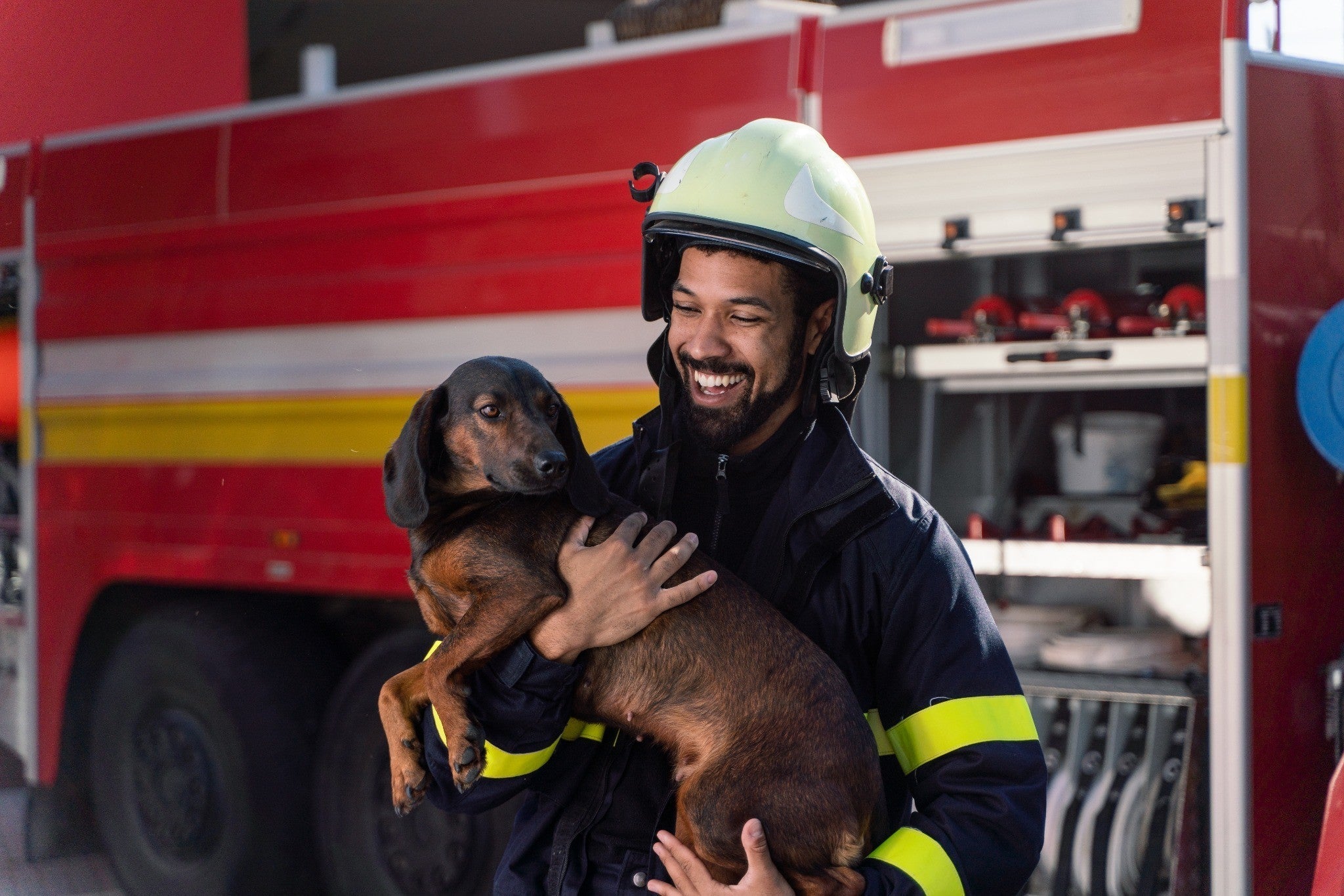
Pet Fire Safety

National Pet Fire Safety Day
Every year on July 15, National Pet Fire Safety Day serves as an important reminder to protect the pets who depend on us. By taking a few simple precautions and preparing an emergency plan, you can help keep your furry family members safe and reduce the risk of a fire in your home.
Did You Know?
Fire prevention and emergency preparation can help protect every member of your household.
Pets are affected by house fires each year.
House fires are estimated to be accidentally started by pets.
How to Prevent Your Pet from Starting a Fire

Supervise Open Flames
Candles, fireplaces and stovetops are among the most common sources of home fires. Pets may knock over a candle or a pan on the stove, allowing flames to reach flammable materials such as curtains. Before leaving home, make sure all open flames have been completely extinguished.

Fireproof Your Home
Cats may chew on loose wires, creating both electrical and fire hazards. Hide or secure electrical cords and make sure lamps cannot be knocked over by a climbing cat or running dog. Stove-knob covers can also help prevent pets from accidentally turning on an appliance.
Preparing Your Pets for an Emergency

Use Pet Alert Stickers for Firefighters
A window cling listing how many pets are inside your home can save precious time. It helps firefighters quickly understand how many animals may need to be rescued. Remember to update the sticker whenever the number of pets in your household changes.

Have a Fire Safety Plan That Includes Pets
Your evacuation plan should account for every member of your household, including your pets. Practicing drills can help your dog or cat stay calm and makes it easier to guide them outside. Keep leashes, collars and carriers close to an exit so they are easy to reach during an emergency.

Make Sure Your Pets Are Identifiable
During the confusion of a house fire, frightened pets may escape or run away. Microchipping provides permanent identification, while a collar with current contact information allows someone to reach you quickly.

Prepare Emergency Supplies for Your Pets
During a fire, there may not be time to gather supplies. Keeping a prepared emergency kit near your primary exit can make evacuation faster and help keep your pet safe and comfortable once you are outside.
Include These Items in Your Pet Emergency Kit
- Food and Water Pack three to five days’ worth of food and water, along with collapsible bowls.
- Medication and Records Include necessary medications and copies of important veterinary records.
- Carrier, Leash and Harness Keep secure transportation and restraint supplies close to your primary exit.
- Identification Photos Include current photos of you and your pet as proof of ownership.
- Sanitation Supplies Pack waste bags, litter, a portable litter box and paper towels.
- Comfort Items Include a small blanket, familiar toy or other comforting item.
- Emergency Contacts Keep veterinarian, emergency clinic and trusted caregiver contact details in the kit.
- First-Aid Supplies Include a pet-friendly first-aid kit for minor injuries.
