

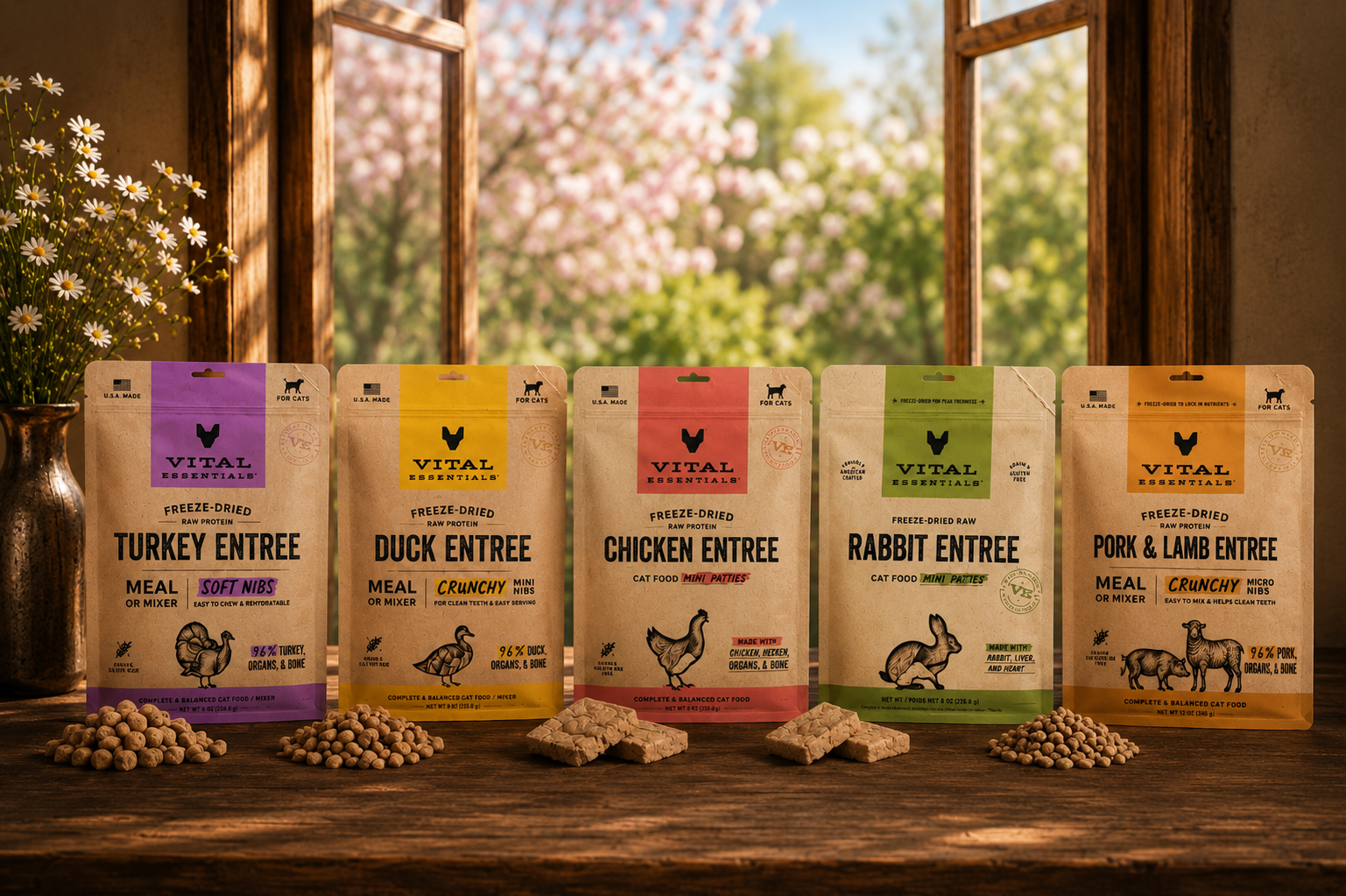
What Sets Vital Essentials Apart in Freeze-Dried Nutrition
Why Choose Vital Essentials?
Whole-animal raw nutrition, freeze-dried to lock it in. Every recipe is built around the way cats are biologically wired to eat: as obligate carnivores who thrive on meat, organs, and bone.
Vital Essentials is crafted in Green Bay, Wisconsin, in a 235,000 square foot facility, owned and operated as North America's largest freeze-dried pet food manufacturer. Raw protein is frozen within 45 minutes of harvest and gently freeze-dried for 48 hours, so the bag on shelf still delivers the nutrition raw is know for, with none of the prep or freezer space.

What Makes Vital Essentials Different?
Up to 99% Meat, Organs & Bone
Raw Butcher Cut Protein in every bite, with cats’ biological needs as the starting point.
No Fillers
No grains. No vegetables. Nothing competing with the protein cats are built to consume.
Organ-Rich Nutrition
Liver, kidney, heart and bone deliver dense nutrients that muscle meat alone can miss.
Freeze-Dried Raw
Gently freeze-dried for 48 hours so raw nutrition stays intact and shelf-stable.
Multiple Textures
Crunchy, soft and rehydratable formats help cat parents match texture to their cats' unique preference.
Range of Proteins
Rotation-friendly feeding for picky eaters and texture-first cats.
Why Texture Matters for Cats
Cats are texture-first, not flavor-first eaters, and most "picky" cats are really texture-imprinted cats. The product range below is intentionally built to give cat parents a way to honor that biology rather than fight it. Each format does a specific job.
Crunchy Nibs & Crunchy Micro Nibs
For cats imprinted on crunchy texture, including kibble households exploring raw for the first time.
- 96% meat, organs and bone.
- Supports natural hunting behavior.
- Fits puzzle toys and automatic feeders.

Soft Nibs
For aroma-driven cats, picky eaters, and as a high-value topper or training reward.
- Tender texture for scent-driven cats.
- Breaks cleanly in half for portioning.
- A bridge for cats transitioning toward raw.

Mini Patties
For households focused on hydration, or cats who do best with a wet, prey-like meal.
- Serve dry or rehydrate with warm water.
- Adds meaningful dietary moisture when rehydrated.
- Supports urinary and kidney health.

Why Texture Matters for Cats
Feeding isn't just nutrition - it's neurology, instinct and early-life imprinting.
Cats are not "flavor-first" animals like dogs or humans. They are texture-driven eaters, and understanding this helps specialists support better transitions, healthier habits and stronger nutrition outcomes.
